Saturday, July 2, 2011

Miraculous Artistry

This carved wood relief at the Getty really took my breath away. Full sized and carved from a block of limewood by Aubert-Henri-Joseph Parent in Paris, 1789, the thickness of each petal and leaf is the real-life equivalent. You can practically smell the lilac!

The lower half is unfortunately as realistic, ahhhh snakes! This allegory, as so much else at the Getty from the time period, portrays the birds (aristocracy) protecting their feathered nests from the snakes (revolutionaries). I suppose we know who won and now we enjoy the fruits of the snakes' labor as so many of the aristocrat's belongings are now in the hands of museums such as the Getty; very...mixed...feelings.

Friday, July 1, 2011

Neoclassical detail

Since we're on the subject, I wanted to share some more of the Neoclassic collections at the Getty. This lovely cabinet was almost architectural in its' detailing.

This Bed from 1775, a Lit a la Polonaise, would make any little girl's heart scream with desire (and it may do the same to mine, but I won't admit to it publicly).

This gilded settee reminds me of one from the aging courtesan's apartment in my favorite movie, Gigi; just made for a canoodle.

Of course, the Neoclassical style was sometimes severe and imposing but always beautiful -such as in this tableux above. I love the touch of whimsy in the chandelier though; it once had a gold fish swimming around the lower bowl. Neoclassisicm isn't all seriousness, it's all in the details!

Thursday, June 30, 2011

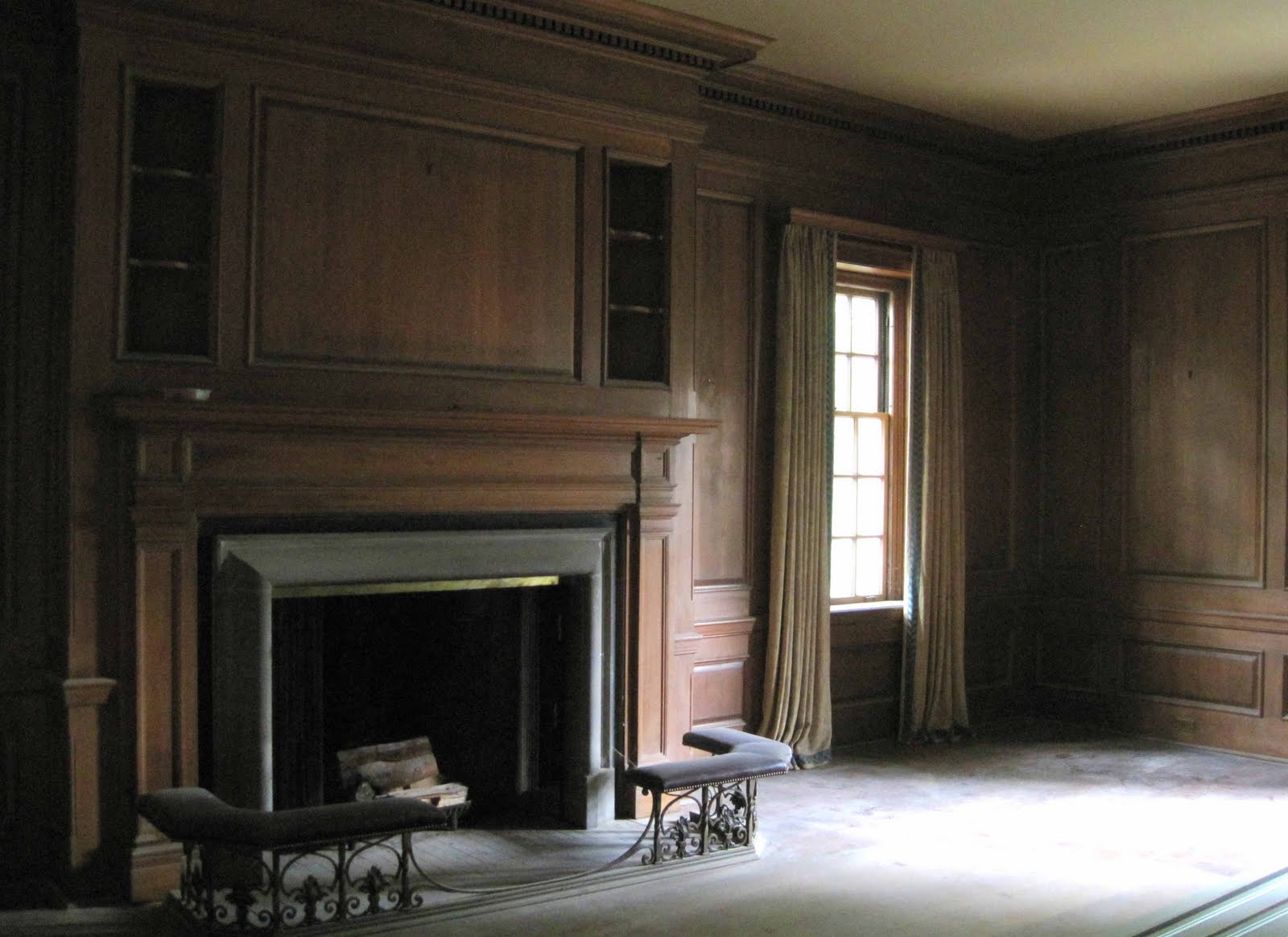
Neoclassical Paneling

Rounding out the collection of rooms at the Getty is the Neoclassical style (possibly my favorite). Together, these styles make up the collection of decorative arts at the museum.

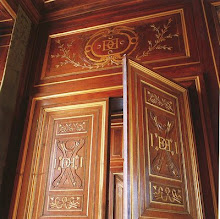
The highlight of the Neoclassical collections is a paneled room designed by the famous Parisian architect Claude-Nicholas Ledoux. Designed for the house of a wealthy plantation owner from Santo Domingo as a Parisian base, the paneling entered American hands after demolition of the Ledoux designed complex in the late 19th century.

You can clearly see the emphasis on ancient Greek and Roman design of the Neoclassical movement, born out of the rediscovery of ancient Pompeii and Herculaneum. This was a direct and contrary response to the fluidity of the previously popular Rococo style (again, you see this following the political climate of a populace fighting against their ancient aristocracy during the age of enlightenment).

The details in this room are simply amazing and I love all of the mirrored surfaces. Hopefully now you can see why I love the Getty so much, and not just for the gorgeous Richard Meier designed campus!

Wednesday, June 29, 2011

Baroque Interiors

Before the Rococo, there was the excessive and sometimes heavy baroque style, popular in the late 17th century and in France, associated with Louis XIV (whose bust appears in the overmantel above). The room seen here is another period room found at the Getty Museum.


Meant to impress, the style is excessively styled with every surface taken into consideration for ornament. Unlike the rococo which was meant to be fun by focussing on light and elegance, the baroque was meant to impress (much like Louis's political regime).

The inlaid ebony writing table above was actually in the inventory of Versailles in the king's mistresses' small palace, the Trianon de Porcelaine (Madame de Montespan). I'm in love with that Japaned box and gilded stand in the window!

Notice the parquet de Versailles flooring in the room, also alluding to the regime. This begs the question, if it isn't baroque, should one fix it? (sorry, I couldn't resist!)

Tuesday, June 28, 2011

Early Rococo

You may remember the Rococo room I showed you from the Getty museum last week; also included in the museum's collections is a Regence room.

Called Regence (after the Regency of Louis XV, 1715-1723, as he was too young to immediately take the throne after the death of Louis XIV), the style moves away from the heavy baroque formalism which Louis XIV dictated at Versailles and into the less formal style found in upper class Parisian townhouses.

This was the birth of the French boiserie as we celebrate it today and you can see it here painted white with the crown and overmantel picked out in gilding. I love seeing the baby steps between formal design styles such as this and that they coincide with major political events fascinates my inner geek!

Saturday, June 25, 2011

Cabinet of Curiosities

I hope everyone enjoys their first weekend of summer! Nothing says summer more to me than seashells from the beach. Why not display them in a gorgeous antique cabinet, such as this one from the Getty Museum in LA; what could be better?!

Friday, June 24, 2011

The charming Chateau Marmont

While in LA, friends stayed in a bungalow at the famous Chateau Marmont and we spent a lazy afternoon lounging at the pool. I just had to share it with you!

Nestled into the Hollywood Hills above Sunset Boulevard, the hotel offers extreme privacy and actually feels more 'east coast' then Hollywood.

Right under the disturbing billboard James Franco put up in honor of Brad Renfro (seen above) is the pool where we had bottles of rose and fresh cherries delivered while dangling our feet into the near bathwater temperature water; heaven.

Built in 1929, the hotel feels like a relic stuck in time, in the best way possible. I loved this patio furniture.

The bungalows are behind the pool along a series of heavily planted pathways with charming surprises around each corner like this little water feature.

The doors have arched sidelights and beautiful stained glass which look to be inspired by Frank Lloyd Wright. The front door leads directly into a casually furnished living room .

The design throughout speaks of the arts and crafts movement and every little detail could be original to the hotel's building.Each bungalow has a small kitchen that I imagine myself spending most of my time.

Love the high painted wood wainscoting and wallpaper.


No dishwasher here - we're back in time afterall! I'm not sure I'd want to cook a full meal on this vintage stove, but it's a charming place to warm up water for tea or leftovers. My grandparents had a similar stove and refrigerator in their basement that were original to their house and I always just loved the look of them.If you ever find yourself in LA, I highly recommend a stay at the Chateau! For more pictures and information -visit the post by HabituallyChic from last year HERE.

Wednesday, June 22, 2011

The William Penn Hotel

Since opening in 1916, the William Penn Hotel has been the cultural hub for many of Pittsburgh's more elegant social events (my parents were married here as well as having their high school proms on the upper level ballrooms).

While the hotel might be a tad bit shabby these days, I never miss a chance of having a drink in the Terrace Room off the lobby seen here, and last weekend was no exception. Elegant crystal chandeliers, great old details and wood paneling, not to mention the sense of history here, all draw me in (as did the bartender's heavy pour!).

Do you have a favorite local hotel that you haunt?

Monday, June 20, 2011

New Life, Old House

While in Pittsburgh this past weekend, I was able to tour a beautiful old house in one of my favorite neighborhoods and see the process of reinvention.

Sitting on a large lot in a mature neighborhood, the house clearly has good bones but was beginning to look a little tired. The roof is currently covered in flat clay tiles, but during the renovation slate tiles will be used (you can see the roofing work on the left hand wing).

The houses in the neighborhood all are stately but their presence belies their relatively small footprint. They may be mansions but they're not mcmansion size: rather they are human scale.

The brickwork was amazing. A watertable lies under the first floor and the windows have brick casing. This window goes into the beautiful paneled library below.

Who doesn't want a room like this in their house? It's no surprise it is the only room to go through the renovation untouched.

Double doors lead you from the entry hall into the room.

This jib, or hidden, door leads back to the butler's pantry and kitchens.

The old doors found through out the house are beautiful painted wood, raised-panel doors with a very elegant design that I haven't come across very often in my work or studies.

Many old houses don't have the insulation required for modern mechanical units so the walls throughout the house are being built-in (see the 2x4 wall construction mounted on the old plaster walls). I loved finding remnants of original wallpaper throughout the house.

This old iron light fixture was found on the ceiling of the screen porch on the back.

In the screen porch you see all of the elements coming together; beautiful old wooden screen doors, interesting wood windows, beautiful brickwork and terracotta clay tiles. In this age of the tear-down and rebuild, it is refreshing to see someone working with what they have.

Saturday, June 18, 2011

French Rococo at the Getty

While in LA, I hightailed it to the Getty to see the exhibit 'Paris: Life and Luxury'

The exhibit focuses on the home life of Parisians of the 18th century -a spectacular time and the objects on display will make your mouth water.

While photographs weren't allowed in the exhibit, I was able to take a few pictures of this French Rococo Parisian room (1730-1755) from the permanent collection (much like the period rooms at the Met). Light was so important so the boiseries were painted light colors to reflect candlelight and costly mirrors were integrated wherever possible.I'm happy to report to those naysayers, that the Getty burns the wicks of all the candles in their exhibits! If it's good enough for the Getty, it's enough reason for me!