One of my favorite buildings to visit on my walks around the city is the Hotel de Salm home to the
Legion of Honour Museum next to the Musee d'Orsay along the banks of the Seine. I've never been inside however despite a rather fascinating collection and renowned building. There are simply always more pressing things to do or it's just too lovely of a day to spend inside.
Completed just before the revolution in 1782 for a German prince by the architect
Pierre Rousseau it was soon taken over by the new government for use by the Legion of Honor. Rousseau's best-known work today is this building but he was really the
starchitect of the day, first for the ancien regime and then the governments which were to follow.

The entry court probably looks familiar to you as it has been copied in many forms in public buildings around the world.
This rare floorplan above (from the book
The Architecture of the French Enlightenment by Allan Braham) is situated with the Seine towards the top of the image, what many people now consider to be the 'front' of the building despite no entry. The addition from the mid 1920s to the lower right now houses the main entry into the museum and other museum offices.

Very few tourists who visit the Musee d'Orsay (just to the right of the image above) know to turn the corner to catch a glimpse of the main entry and courtyard of the Hotel de Salm.
I've always admired the 1920s quiet beaux-arts entry to the museum which faces the d'Orsay.
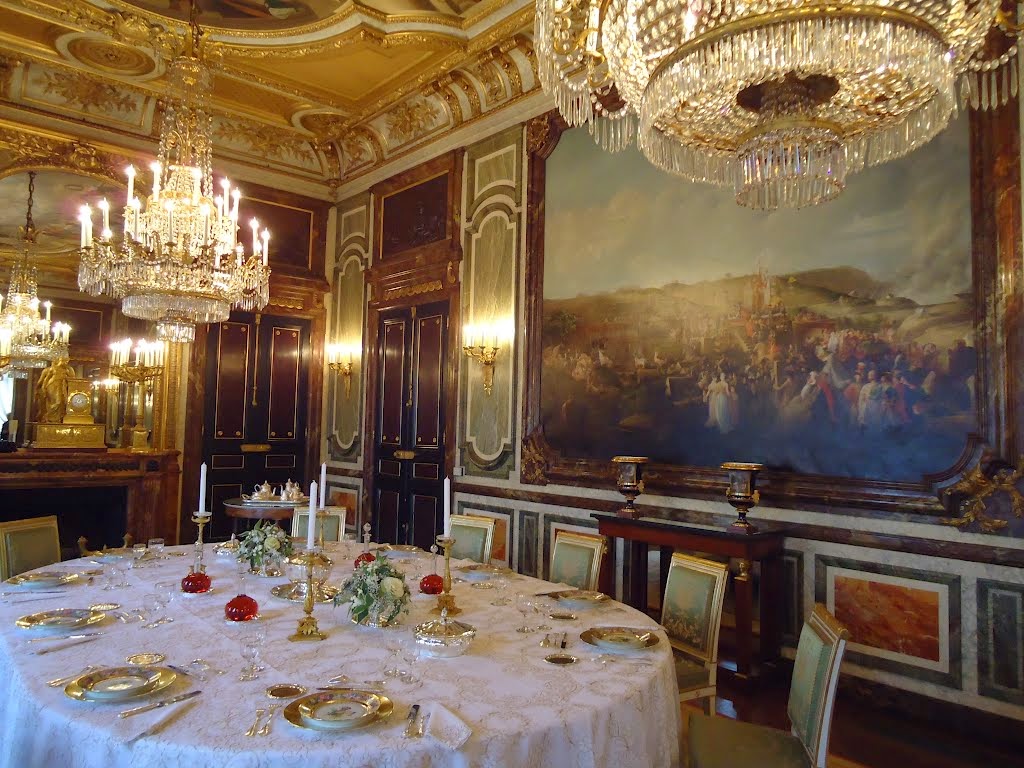
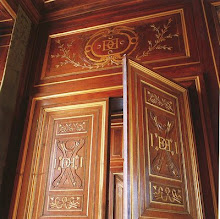
The interiors are quite spectacular and date to the rebuilding of the structure in 1871 when it was burned during the Commune. How I would have loved to have seen the original! What is it with the French burning their heritage every few decades?
The main salon seen in the image above and below is the center of the river facade, obviously with water views.
The image below taken after the Commune shows the burned shell. In the background you can see the opulent Palais d'Orsay which was also burned during the Commune and eventually replaced with the train station which now houses the famous art museum. The burned palace sat unused for 30 years, a daily reminder of the civil war.
The Hotel de Salm may be relatively obscure to the common tourist but has inspired many of our most beloved public buildings and been nearly replicated many times, most notably at the Legion of Honor Museum in San Francisco, seen below and at my previous post
HERE, and also at the Chateau de Rochefort en Yvelines (a few images below). It was one of Thomas Jefferson's favorite buildings, aspects of which he incorporated into his own home at
Monticello.
The odd thing to me about the Legion of Honor in San Francisco is that the main facade of the original in Paris which faces the Seine and is most widely known, is actually the back of the museum in San Francisco which no one ever sees (below).
The museum should really provide a more landscaped courtyard to the rear of the museum to take advantage of the beautiful structure.
One really senses the similarity of the buildings most through these aerial views (the Chateau de Rochefort en Yvelines seen below).
The French book
L'hotel de Salm published by
Monelle Hayot further details the existing building and opulent interiors should you be interested.
Most images are not my own. To see accreditation please refer to the image file names.




 Posts
Posts

















.JPG)