Thursday, March 12, 2015

Plaza de España, Seville

Why don't we have World's Fairs anymore? They provided us with some of the worlds great monuments such as the Eiffel Tower and the entire City Beautiful movement. If you have any Beaux-Arts styled buildings in your city or town, such as a courthouse, museum, or townhall, you can thank the World's Fair movement!  I saw an exhibit on that at the National Building museum a few years ago and it was really an eye opening experience (read more about that and how it influenced modernism HERE).
Recently I was sent photographs of the Plaza de España in Seville, which was the centerpiece of the Ibero-American Exhibition of 1929, by my Australian Penpal which really took my breath away.
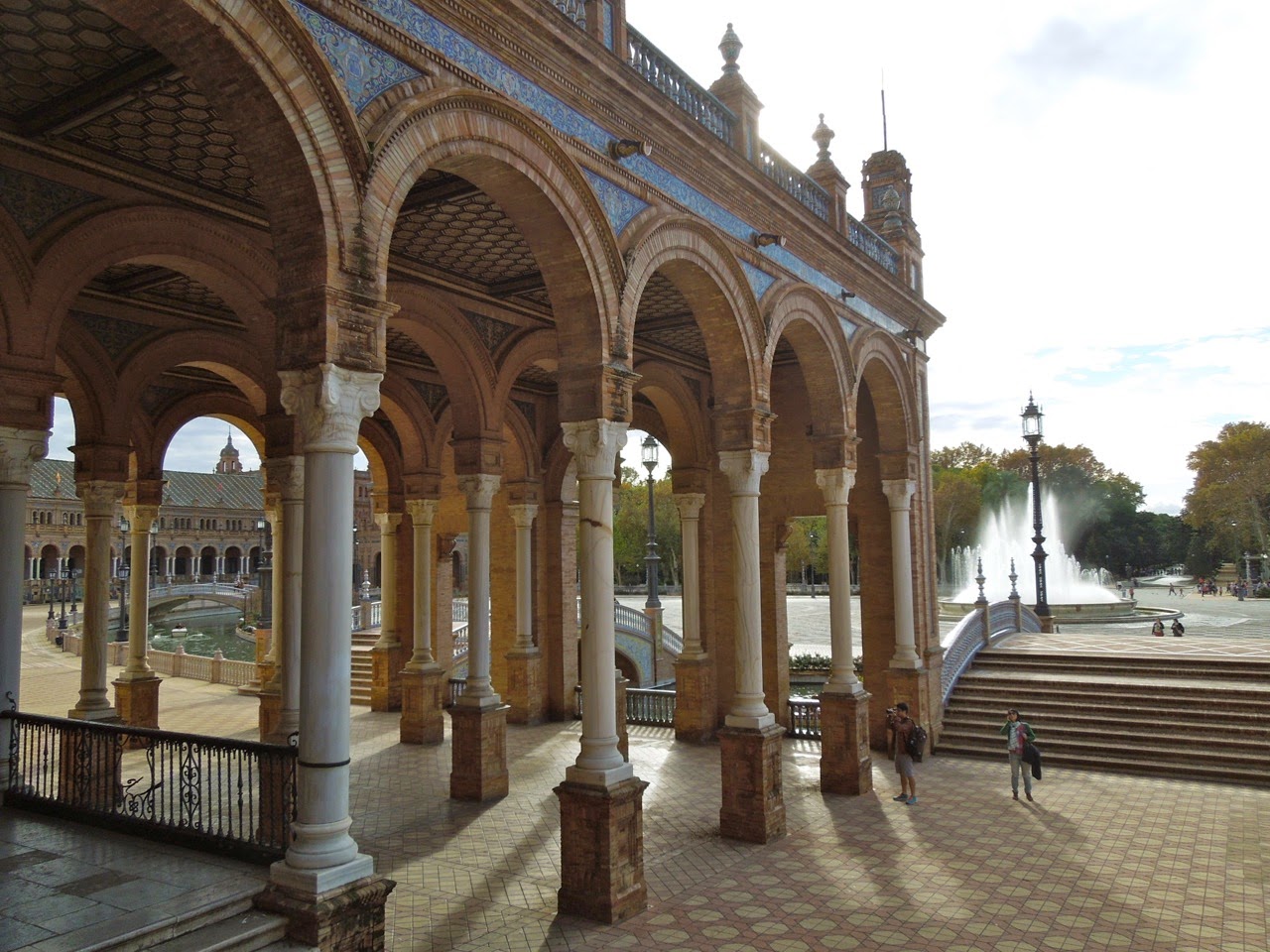
This enormous plaza designed by Jean-Claude Nicolas Forestier contains fountains and a Venetian-style lazy river complete with boat rides, surrounded by a semi-circular building which now houses government offices.
At the base of the building designed by architect Anibal Gonzalez which surrounds the plaza are 48 alcoves which represent the provinces of Spain, seen in the image above. These have provided great photography fodder with Spanish tourists posing in front of the alcove representing their home province.
This grand entry loggia leads one into the center of the main building and provides a shady respite from the harsh Spanish sun.
In true Spanish tradition albeit with an Art Deco twist, the ceiling of the loggia is beautifully patterned.
Lets step inside the main building to the central staircase, setting of many Spanish weddings. The image below shows why!
The tilework of painted encaustic tiles is beautiful and lends human scale to the otherwise massive stair.
As if one needed another reason to visit sunny Spain, be sure to check out the Plaza de España in Seville!

Tuesday, March 10, 2015

Fabric decision - designers help!

At this past weekend's estate sale HERE I purchased a Biedermeier stool for use with my comfy reading chair, another estate sale find which I recently had reupholstered (see that transformation HERE). You can see the upholstery that came on the stool is in good shape, a synthetic material from the 1960s, but doesn't quite go with my apartment.
Of course the easy answer is to use the remaining fabric I have on the chair, a linen printed with a white paisley. Is this too boring? I also worry the light colored fabric will soil easily.
I have some lovely black mohair I purchased for another project and never used. I worry this is the opposite - too dark.
Some striped velvet left from a chair I recently had reupholstered in my bedroom would work but I'm not sure it works here.
The last choice I already own is an embroidered paisley silk in blues and french grays. I think the colors seem to go with the room, the darker colors may mask any dirt, and the paisley patterned fabric relates to the chair.  I'm obviously leaning in this direction but what do you think, will any of these work?

Monday, March 9, 2015

Identify this estate sale find - help!

This past weekend I attended one of my favorite kind of estate sales: a very old Washingtonian family in a very old grand house. The family bought said house during the great depression after selling their huge estate and literally never touched the house again: not paint, no adding furniture, etc.  Shabby chic would be a great term (if it wasn't already attached to something quite different). I wish I had some pictures to share with you of the house but I never thought of taking any snapshots unfortunately.
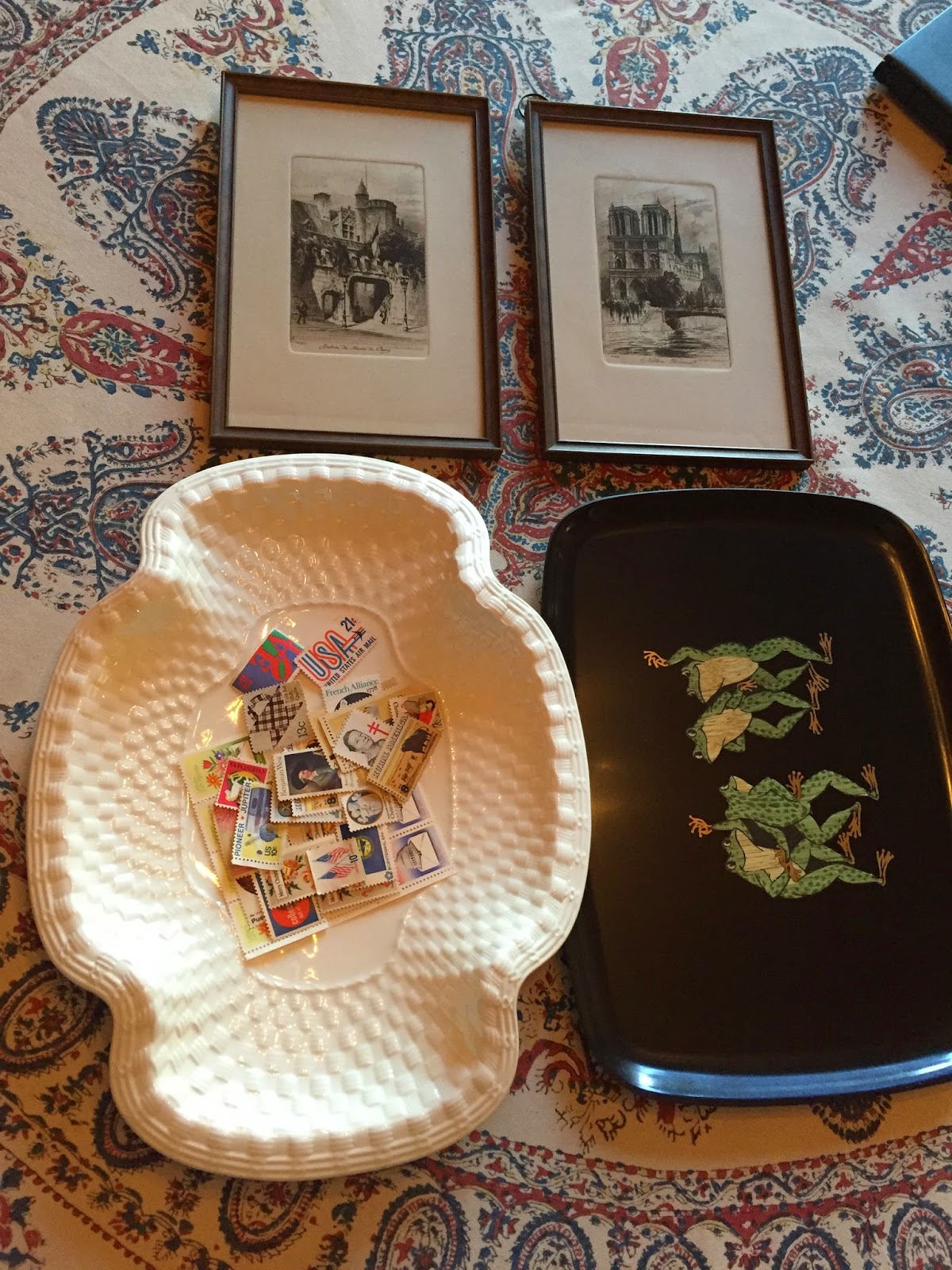
Sloans and Kenyon, a local auction house, hosts the best estate sales of the oldest families here in town. If they're hosting you know you need to be there! I had a huge haul (including literal armfuls of linens which I spent all day Sunday oxy-cleaning, laundering, and ironing) and just a few of the items are shown here in this post.
One item I purchased remains a bit of  a mystery. This small pitcher reminds me of belleek ware - the collectible paper-thin Irish porcelain, but is unsigned.
Notice it is double walled, the outer wall being pierced with a continuous inner lining.  The only marking is an S.72. and an LS scratched into the glazing. I can't figure out who made the thing.
Any idea who could have made my new treasure?

Friday, March 6, 2015

Teatro Municipal, Rio de Janeiro

It's been one of those weeks where you just need a little pretty.  Luckily I have my penpal to supply me with beautiful photographs from his travels. One gem that caught my eye is the Teatro Municipal in Rio de Janiero, Brazil (which I can never think of without humming a little Fred Astaire, I love that song of his about Rio!).
The Opera house, designed by French architect Albert Guilbert, was heavily based on the Palais Garnier or Paris Opera House (See my post on that storied building HERE) and completed in 1909. A later addition to the concert hall dates to 1934 with an adjunct being added just 20 years ago.
 The grand staircase could almost be seen as an exact copy!
 Is it any wonder that anyone would want to copy this great, impressive building?
 The ceiling features a beautiful stained glass skylight.
Just as in Paris the top of the stair holds various gathering spaces for intermissions. They are slightly less ornate but no less grand.
 The similarities are so stunning that one expects to stop onto the balcony to view Paris!
 The stained glass is very much of the time of this theater though, 1909.
The exterior loggia is as ornate as the interiors.
 Why do modern theaters lack this attention to detail?
 But lets step into the auditorium and see the main attraction.
Notice the mural above the proscenium.
Does anyone ever use these grand boxes which flank theater stages? I frequently see them and they're always empty!
The large seating capacity dates to the 1934 addition -still very similar to the Paris example only missing the ceiling by Chagall (see that in this post HERE).
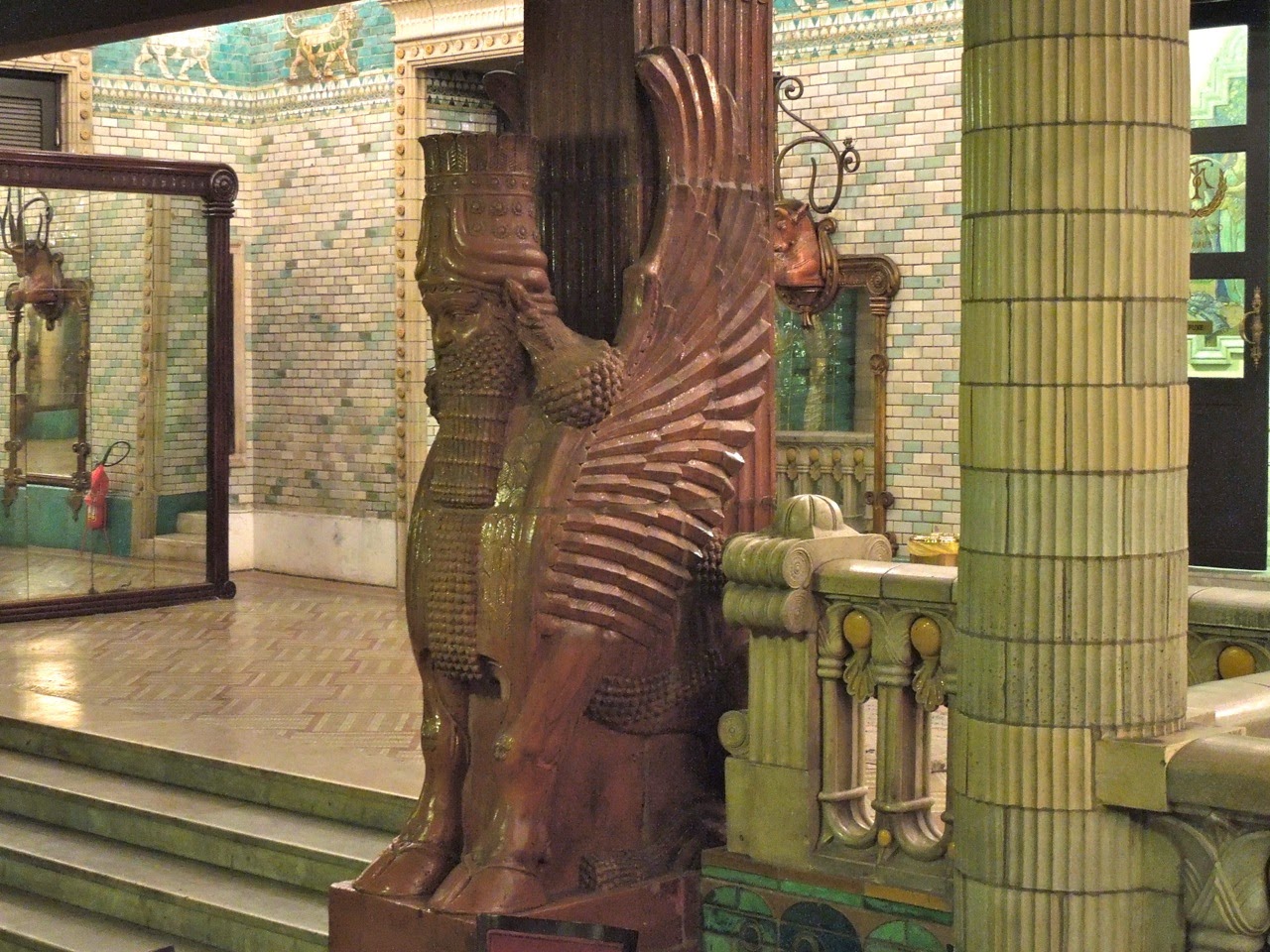
Elsewhere in the building is this intriguingly eclectic space which I can only say seems very Brazilian to me which seems to operate as a banquet hall.
 Notice the bulls as column capitals.

 Elsewhere in the room column bases are no less unusual.
 Notice the intriguing tiling and sconces which also feature more bulls.
 I think this dose of pretty much wraps up the week for me, don't you agree?

Thursday, March 5, 2015

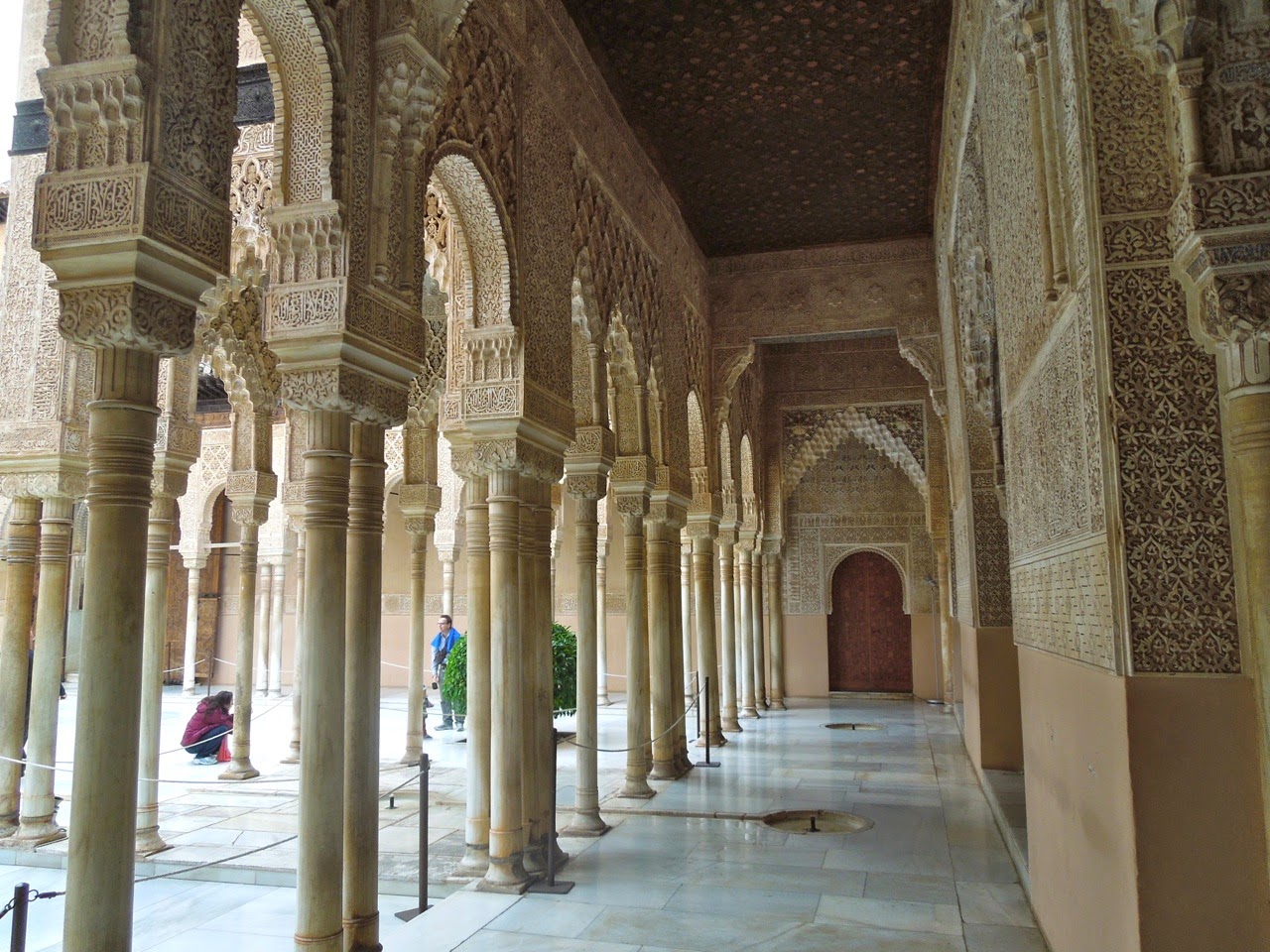
Alhambra details

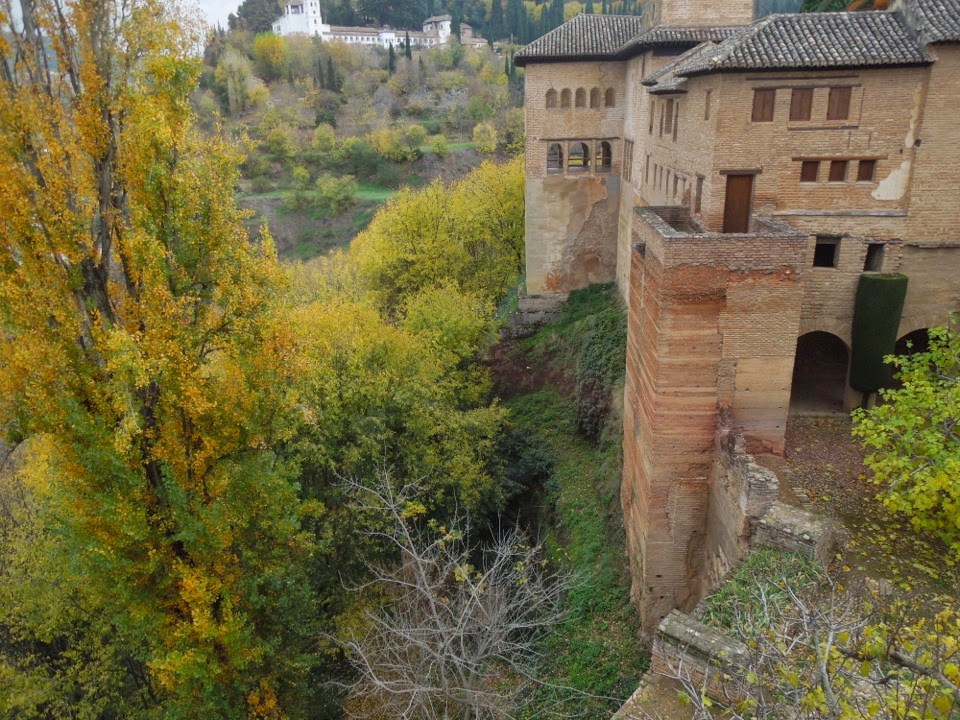
The Alhambra is a fortressed palace in southern Spain that dates back to the 9th century.  At the time this area was ruled by the Moors and it wasn't until the late 15th century that it came under Catholic rule (see previous post on the Palace of Charles V HERE). 

The Alhambra is really a warren of separate palaces built under different rulers all joined together on a hilltop as one fortress providing protection against invasion.
Numerous courtyards contain different gardens and water features.
Each are slightly different reflecting the tastes of each ruler and the style of the day but all followed the rule of  making a 'paradise on earth'.
On this cold snowy day I could imagine spending a lot of time in Southern Spain!
The striking thing about each section are the numerous patterns and decoration employed.
The earliest patterns were Arabic inscriptions which morphed into geometric patterns.

No interior surface was left unadorned. Imagine the crews of artisans required to create all of this!
No two rooms are alike, no two ceilings are even the same shape!
Patterns are found within patterns. The starshaped recess in the ceiling has each section broken into smaller and smaller ornate areas.
Bright colors were also orginally used and many still survive.
I love the wood ceiling below with the patterns incised and then inlaid with semi precious stones.


Tilework is also a common decoration found throughout the Alhambra as well as most of Spain.
Glazed and painted or else laid into patterns.
I love the colorful herringbone floor above which appears to be laid with common subway tile nearly; so modern!
The complex lay abandoned for centuries, full of squatters and vandals. Renewed interest led to rehabilitation in the 19th century.
While this level of detail isn't something we aspire today I think we could learn a lot from the attention to detail.
I hope you enjoyed this brief visit to the Alhambra! Many thanks as always to the world traveling Australian Neil