Tuesday, September 26, 2017

Powis Castle gardens, Wales

In the wealth of saved emails from penpal Neil, Powis Castle stands out as a remarkable building site. The medieval castle dates from the 13th century but has been improved and built upon until the present time. The gardens however are the real thing to see here.
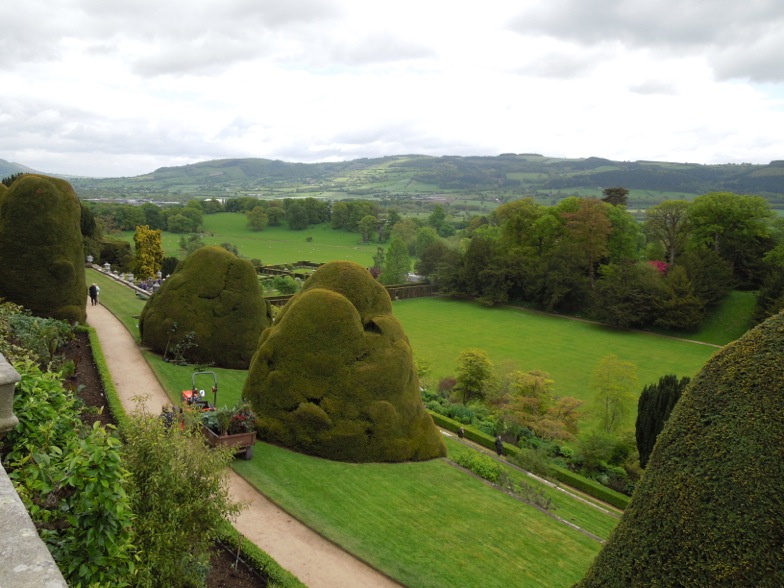
Taking advantage of the hilltop site, the baroque gardens original to the 17th century, terrace down the hillside creating dramatic views of the castle in Italian style.  They were extensively restored by Violet Herbert, Countess of Powis, beginning in 1911 and becoming her life's work until her death by car crash in 1929.
Although a castle is essentially a fortress, a military stronghold, the multiple rebuilding of the structure and addition of expansive windows have created a palace over time.
I'm sure the original occupants wouldn't recognize their early home 800 years later.
Perhaps the courtyard entrance below which remains the most unchanged would appear familiar.
One can see why such an old fortress would be lived in for centuries -the views looking out over the surrounding Wales countryside are astounding.
And the views up towards the castle are no less impressive.
I love the way they shape all of the Yews -many dating from the 18th century which explains their size.
The last architect to work on the house in the early 20th century was George Bodley, primarily known as an ecclesiastic architect, who was a big proponent for a return to 14th century Gothic architecture.
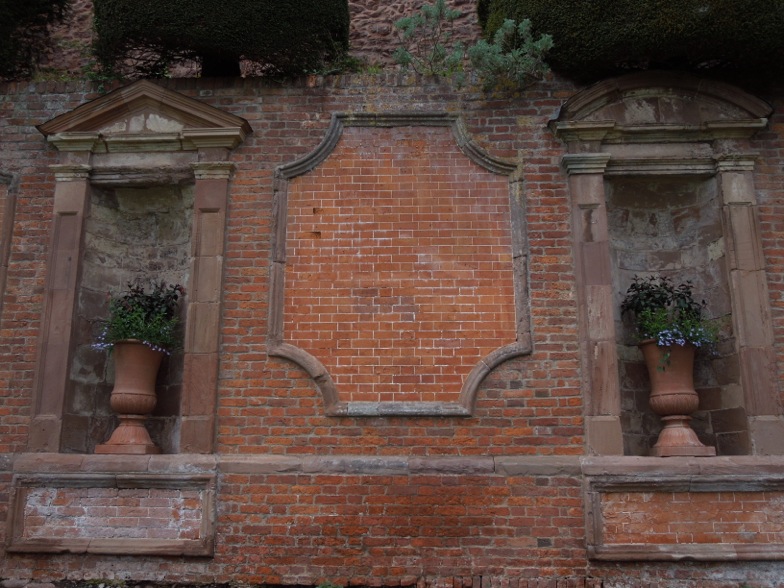
Love the potted urns in the Aedicule above. (gotta break out the big words when you know them!)
The orangery at the base of the hill leads out onto the lower garden. From this angle it looks like part of the castle, making it look like a skyscraper.
Nothing beats an English style garden in the summer in my book.

I would love to know what this big purple bush is if anyone knows?
Lovely wisteria in bloom.
The house is a treasure house as well, containing the usual 17th & 18th century masterpieces in art and furniture as well as artifacts from Bengal, India collected by the Clive family. Pictures are not allowed of these as they are still owned by the family while the house has been in the possession of the Trust since 1952.
One can stay in a large house on the grounds called the Bothy as well as another smaller cottage off the kitchen gardens.
I know this was one of Neil's favorite houses to visit in GB and suspect it would be for you as well!
Read more about Powis Castle and Garden HERE at the National Trust's website.  Worth a look at the pictures, it is super charming!

Thursday, September 21, 2017

Gil Schafer, A place to call home

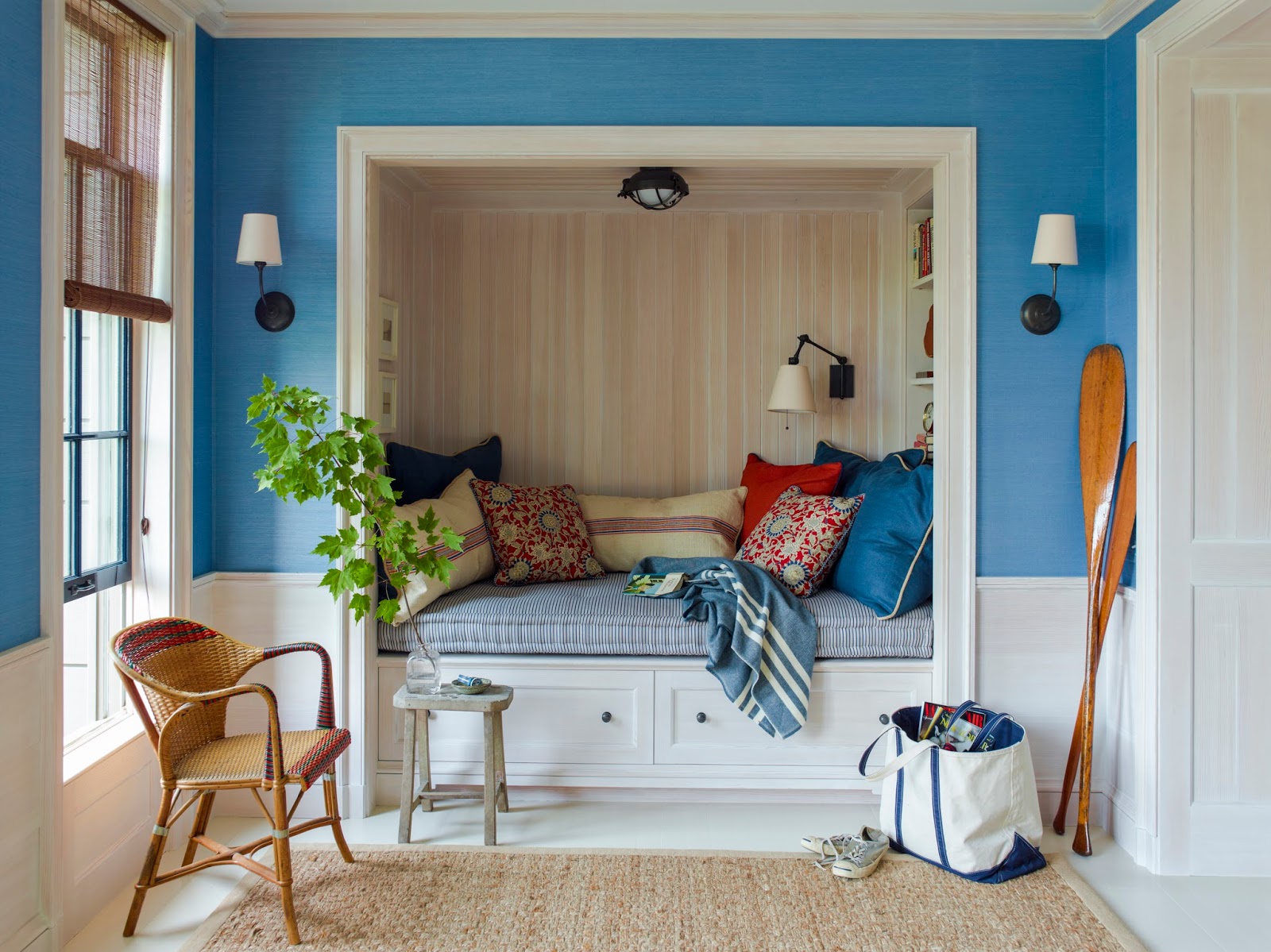
The most highly anticipated book this year has got to be architect Gil Schafer's "A Place to Call Home" from Rizzoli.  His first book, 2012's "The Great American House", was a huge hit and is one of my top favorite design books in my library. The book is split into 2 parts: the first he discusses what resonates with him when designing a house for a client (or himself) and the second part takes an in depth look at some of his more recent projects. 
I think one of the reasons Schafer's work is so popular is that he believes in the maxim God is in the details. In no project is this more important than in a home where someone lives with and physically touches each design decision on a daily basis. Schafer is a residential master; the projects in the book range from the traditional architecture he is known for to more modern styles.
The book is written so conversationally one walks away feeling you've made a new friend!   It's easy to form a connection to Schafer as he begins the book with stories of his childhood of different family houses: the sites and smells he remembers. I think we all have those memories of grandma's house!  
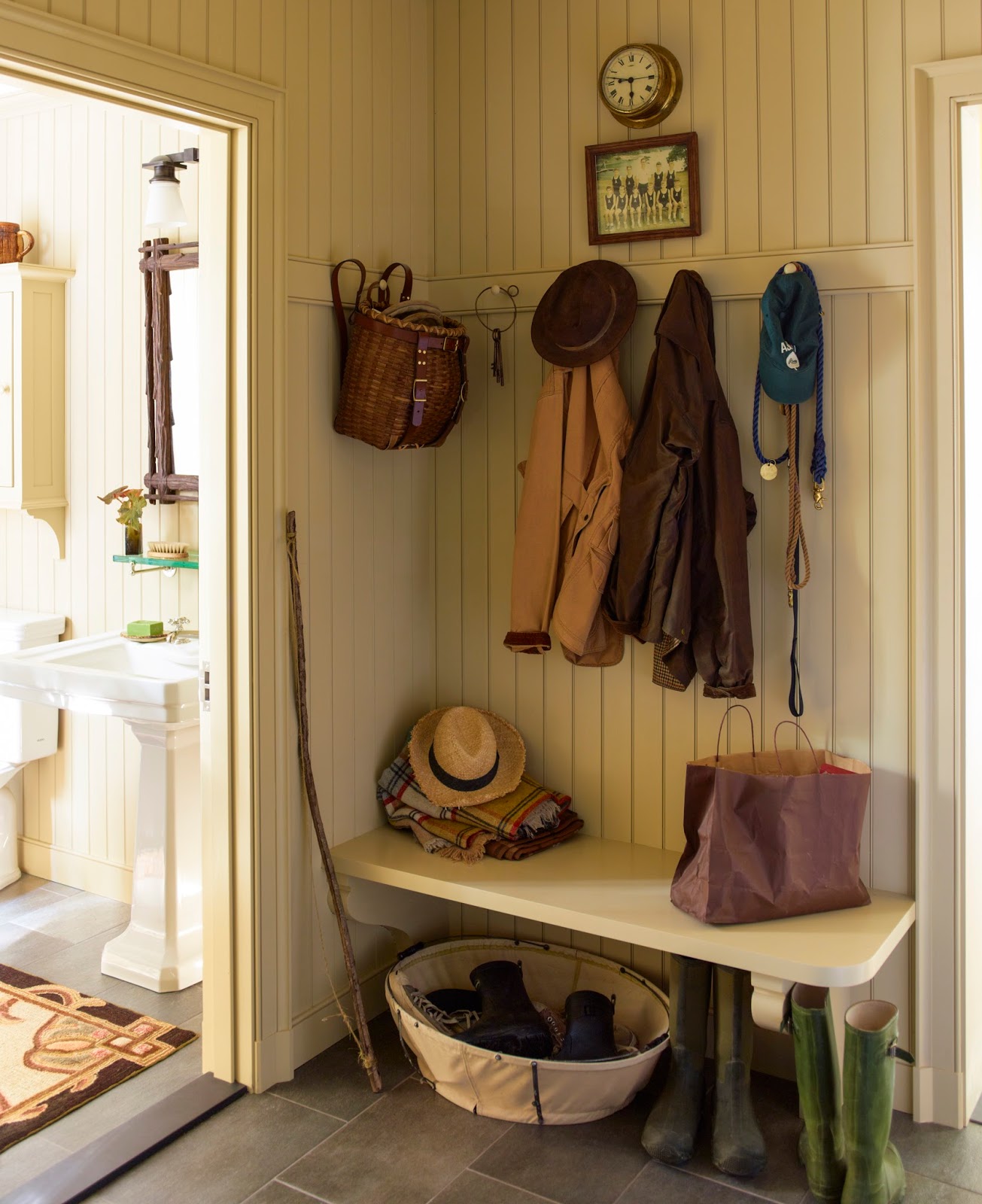
My favorite section is called 'the spaces in between' which are so important to a home; Linen closets, mudrooms, butler's pantries; etc.  Some great tips to pick up from that chapter!
Clients today rarely ask for formality and Schafer addresses this intelligently. It's possible to have functional spaces in a more traditional design aesthetic; candlelight and dressing up are not required!
This book is a must have for any design library and will bring a smile to your face. I promise you'll return to it again and again!
All images taken from the book, published by Rizzoli, and photographed by Eric Piasecki.

Friday, September 8, 2017

Making House: Designers at Home

Book publishing season is upon us and it feels like everyday a great new design book hits the stands to devour! Rizzoli is about to release "Making House: Designers at Home"  by Dominic Bradbury which is one of those great peaks into our favorite designer's own homes -many that will surprise you!
Kelly Wearstler's Malibu house definitely fits into her aesthetic with these highly refined marble built-ins in her living room which are astounding. Wait until you see the adjoining fireplace!!!
The London home of textile designer Neisha Crosland is highly undecorated, which I love to see, and reflects her fun personality. Those double oak leaf chandeliers I want so badly!! Such a fun idea to upholster all of the dining room chairs differently too.
Italian architect Piero Lissoni's minimal home in Tuscany will soothe and calm your senses.  This metal staircase may be my favorite thing I've seen in awhile: simple yet elegant.  I wish our codes in the USA would allow an open rail!
Many of the designer's homes pictured are familiar to us but I love to see how they evolve over time. Case in point are both Miles Redd's NYC townhouse and Stephen Sill's Westchester country house which have been published multiple times.  There is always something new to see as the spaces are constantly changing as the owner's grow; these are the design laboratories of great minds.
Making House from Rizzoli is a great look at some of our favorite top talent's private spaces - it's human nature to be nosey, right?  Time to dive right in and see how they're living!
Photography in the book by Richard Powers

Friday, August 18, 2017

Lechlade, Gloucestershire

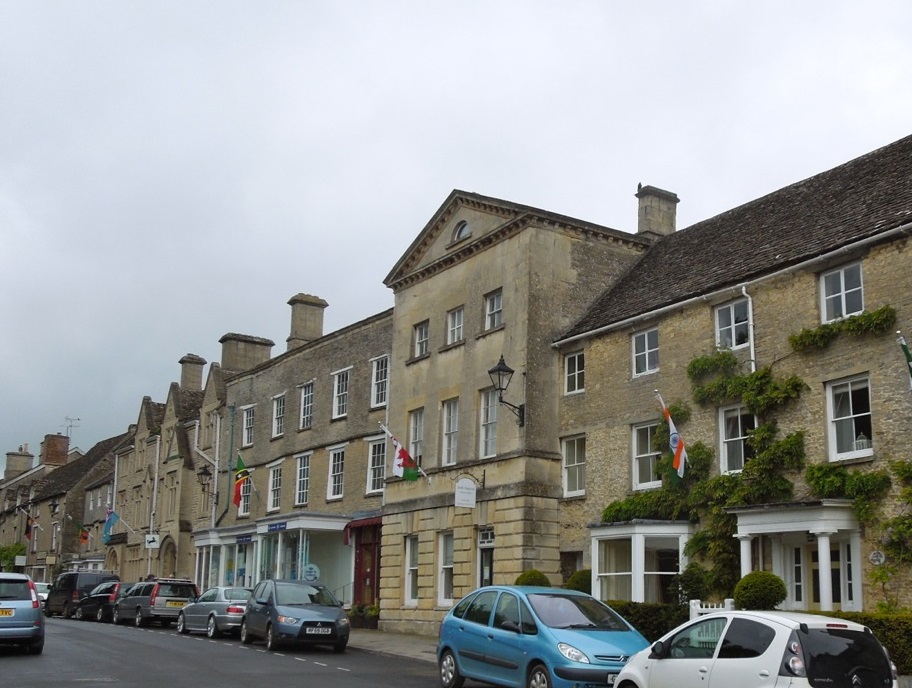
I've recently been looking back at a cache of saved emails I have from my online penpal Neil (who if you remember sadly passed away last year) and came across photos of a small town in Gloucestershire, Lechlade, that he had visited.
Not only is the town near one of his favorite houses which I've blogged about before, Buscot Park (see that post HERE), the surrounding towns have a lot to offer including some really beautiful gardens and houses made of the local stone.
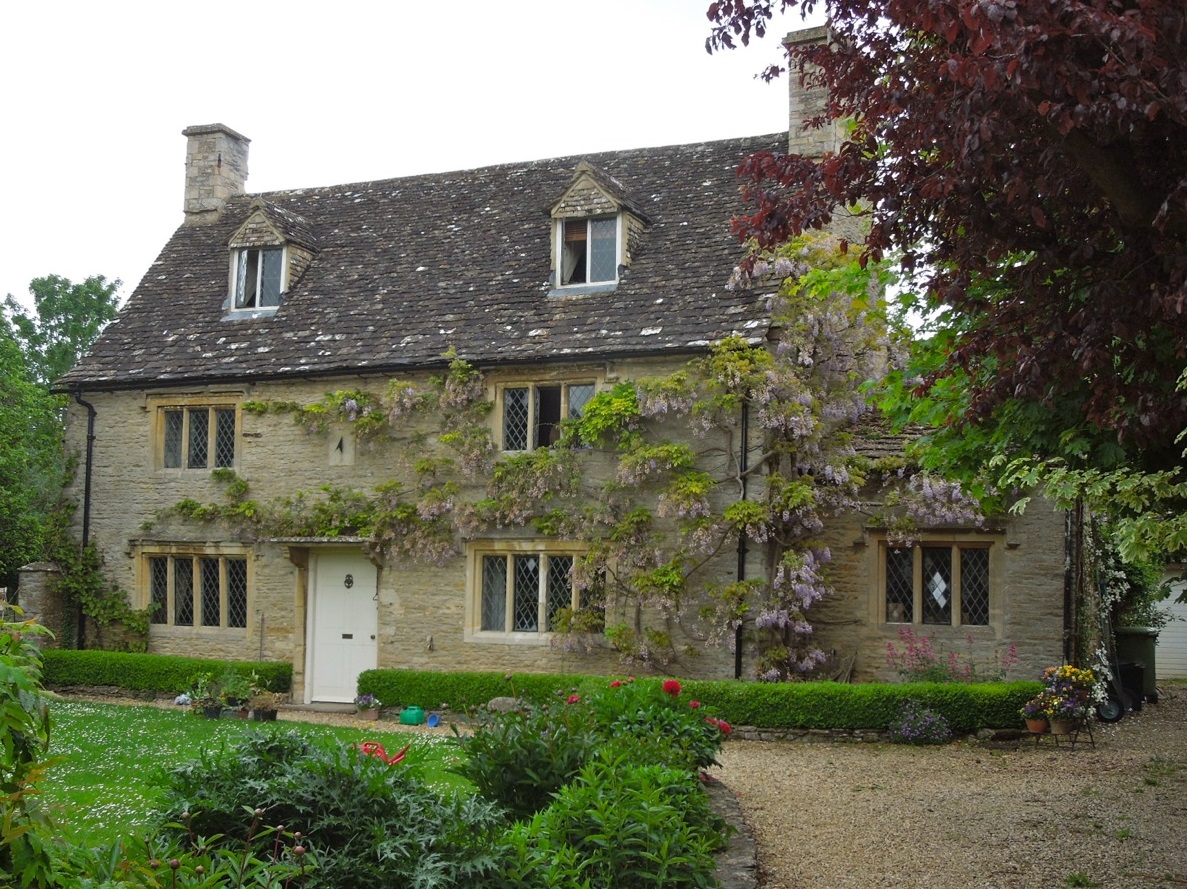
There is nothing I love better than an old house with a crunchy gravel drive -note the wisteria on the bay window above too.
Located centrally in the town is the 15th century church of St Lawrence and the beautiful parish house above.
 This is the southern edge of the Cotswolds so you get a fair number of their famous stone cottages here as well.
 I think just these few pictures are reason enough to prove why this area is such a tourist destination.
In nearby Fairford is the Bull Hotel which looks absolutely charming as your home away from home while touring country houses, small villages, and antique shops. Next vacation perhaps?

Friday, August 4, 2017

Museum of the 18th century - Musee Cognacq-Jay, Paris

One of the many small charming museums of Paris is the Musee Cognacq-Jay, covering the influential design of the 18th century. The collection was formed by the founders of La Samaritaine department store and opened to the public in 1929 although in a different location.
The city of Paris, which manages the collection, moved the museum into the Hotel Donon in 1990. This 16th century hotel particulier was renovated heavily over the centuries before the city rescued the structure in 1974 and restored it to its supposed 18th century appearance.
What an excellent place for the collection then, and a great location in the heart of the Marais. The move into the structure though was heavily debated and frowned upon by the founder's family.
I loved the wallpaper in this room, which feels so modern, and especially the little bookcase above.
While the collection is comprised of furniture, art, and decorative objects of the 18th century there are some noted exceptions.
 One of the highlights of the furniture collection is this lit a la Polonaise (Polish style bed).
This carved and gilded wood bed was made by Georges Jacob around 1785 and features period appropriate blue damask upholstery.
 The paintings of the period set the scene and tone of the period.
 One can see why the 18th century has been so influential to designers!
The stairs of the hotel are particularly lovely. We really liked the coved plaster ceiling of the main stair.
 The lower level stairs are formal limestone and iron with lovely age and wear to them.
 The upper levels have more cost effective wood stairs with the same iron rail.
The building is a great example of this type of structure found throughout Paris and is noted for its attic with beams much like a ship's structure. 
Add a trip to the Cognacq-Jay on your Parisian vacation; Best part is admission to the main collection is free!