My last post on the
Villa Borghese proved so popular I thought I would share another Roman palace with you, the
Gallery Doria Pamphilj, which is also open to tour.
Begun in the early 17th century by the Pamphilj family the Palazzo is arguably the largest in Rome and still family owned and occupied!
Added onto over successive generations the building is enormous and encompasses numerous different wings and courtyards, as seen by the ground floor plan above.
If one tours the art gallery or private apartments you now enter off the Via del Corso through a beautiful courtyard, seen above. As the family is still in residence signs of daily life such as parked cars are evident throughout the building.
Through a parking court and up a flight up stairs are the public galleries from the 18th century which make up the public art museum.
These grand spaces definitely feel public but with a family as important as the Pamphilj one was meant to be impressed and possibly overwhelmed.
The first room one enters on the tour is the reception room, which had been closed to the public until recently. On the audio tour the current Prince tells how this room was rented out by a bank for decades and used for their yearly board meeting and otherwise was kept under lock and key.
So glad we are able to enjoy it now! Love the marble bolection mould fireplace surrounds.
One wouldn't feel in a European palace if there weren't numerous enfilades to admire.
The current prince talks about roller skating through these rooms as a child on the audio guide!
Notice the velvet covered walls in this space.
The ballroom was decorated much later in the early 20th century for the coming out ball of the Prince's aunt and joined together 2 rooms so that it would be large enough.
Many great musicians have performed in the musician's gallery, seen below, including
George Frideric Handel performing works he wrote for the family!
The ceilings of the private chapel are trompe-l'oeil to appear like a clerestory. Very convincing from certain angles even centuries later!
The real draw of the tour are the art galleries which surround the front courtyard referenced earlier in the post.
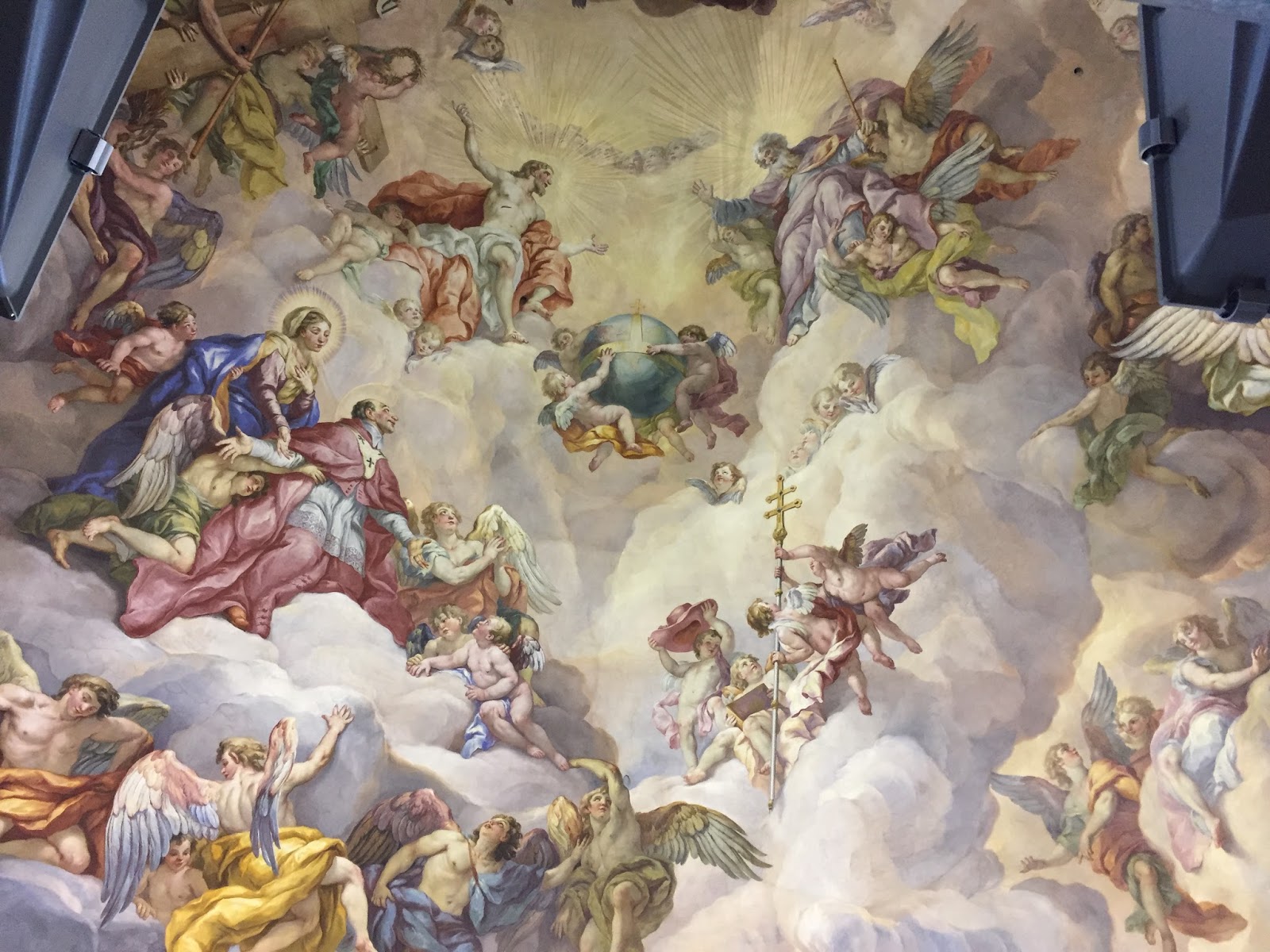
Even the ceilings are highly decorated with ancient painting.
I loved this 17th century painting of Noah.
This bust of Olimpia Aldobrandini Pamphilj is important because she was one of the founders of the collection. She had it commissioned from Giovanni Lazoni da Carrara as an old woman showing her when she inherited her fortune as a teenager.
The detailing to the wall painting is astounding.
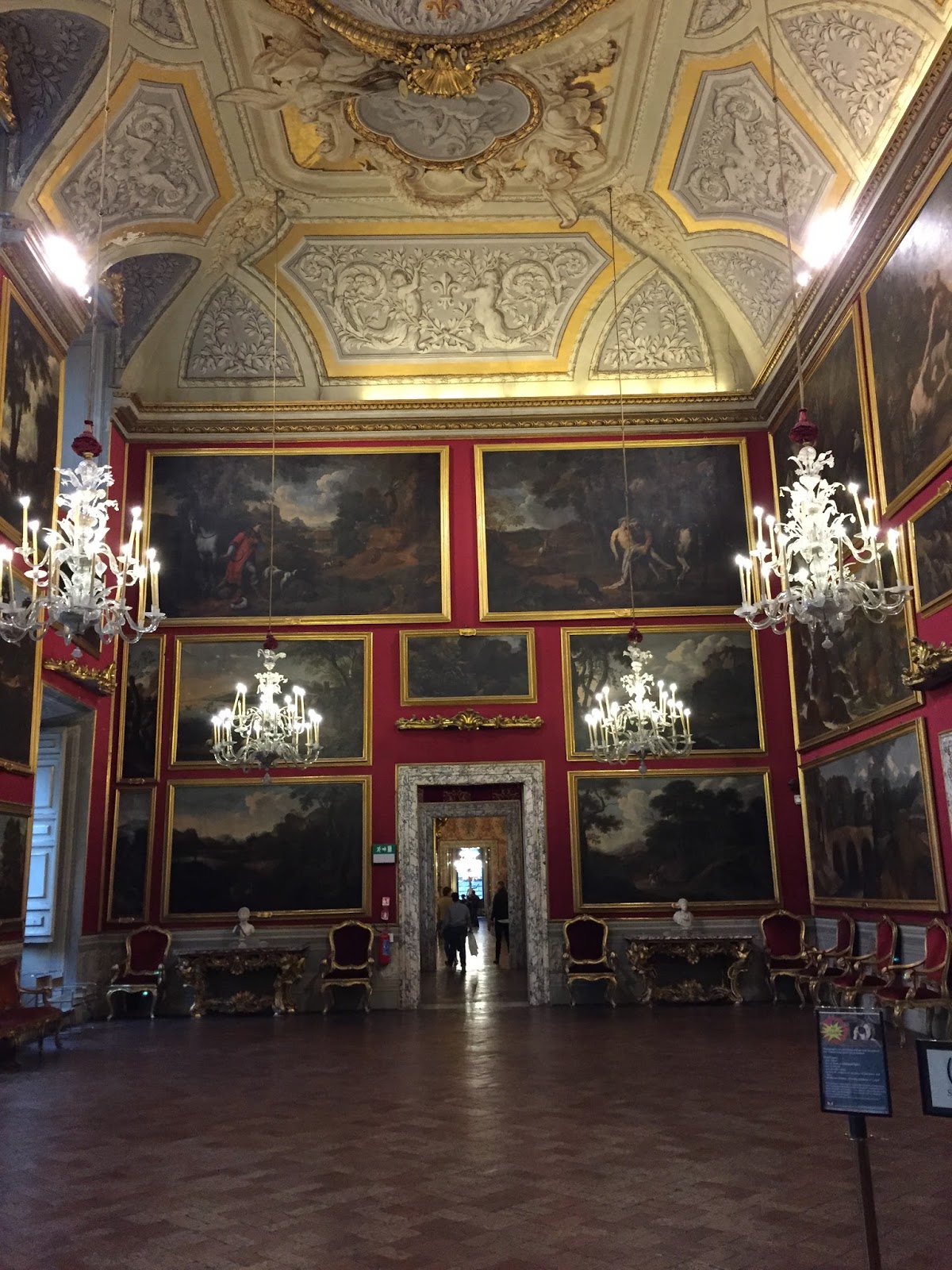
Imagine touring these rooms by candlelight?
All of the rooms are lit by ancient Murano glass chandeliers naturally.
More trompe l'oeil ceilings.
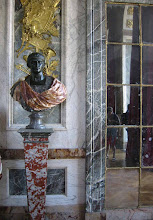
Commemorative busts of previous generations dot the galleries.
Have I mentioned how much I love an enfilade?
One can also take a tour of the private apartments, starting with this room above, to see how the family lived in the 20th century amongst such splendor. We were too overwhelmed to see even more so saved it for our next Roman holiday!
This spectacular bust of Olimpia by Alessandro Algardi features astonishing paper thin carving of her veil.
The sculpture room was damaged during a snow storm in the 1950s when the ceiling caved in. It took decades for the sculptures to be restored and pieced back together. Many were broken into thousands of pieces!
One would never know by looking at them that they had ever been damaged.
The Centaur Furietti Vecchio above was shattered into smithereens but stands proud once again.
The oldest part of the palazzo houses the pre-Renaissance collection naturally.
Don't miss this stunning collection if you find yourself in Rome -the
Gallery Doria Pamphilj!
Sidenote: across the Via Lata from the palazzo is the charming Fontana del Facchino from the 15th century, seen above, which is one of the 'talking fountains' of Rome. These are satirical fountains offering pure water to the public after 600 years! Rome is full of surprises.






 Posts
Posts










.JPG)