Wednesday, October 15, 2014

ICAA tour in DC, Clara Barton Missing Soldiers Office

Join the ICAA next week (Wednesday, Oct 22 2014 from 6:15-8:30 PM) for an exciting tour of the newly restored Clara Barton's Missing Soldiers Office in Washington's recently gentrified Gallery Place / Chinatown.
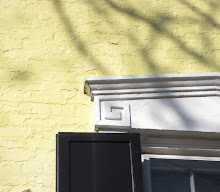
 image by Pepper Watkins
The tour will include the museum director relating the history of Clara Barton followed by how the research was conducted to fulfill the 16 year conservation and restoration of this forgotten gem from the Civil War era. 2 AIA learning units are available for those who need them and fun will be had by all. Join me there!
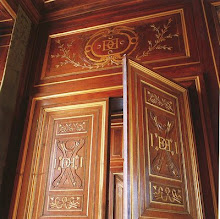
image from OLBN architects
The cost is $10 for ICAA members and $25 to the general public. To reserve your spot please email Susan Sapiro at susan.sapiro@classicist-washington.org.  The Clara Barton Missing Soldiers Office is located at 437 7th Street NW.

Friday, October 10, 2014

Michael Hampton Design: Architectural Watercolors -gallery opening

I'm so proud of my good friend Michael Hampton.  Not only is he a talented designer but did you know he is an accomplished artist as well? Next Friday evening, October 17th, from 6-8 is the opening of a show of his Architectural Watercolors (some pictured here) at Susan Calloway Fine Arts here in Georgetown.
I recently purchased one of his architectural watercolors myself and the amount of time and research he spends on their execution is really impressive. Michael continually hones his watercolor skills through the many recent classes he has taken including ones offered by the ICAA. One can always learn and grow!
If you're in Washington I hope you will take the time to visit Michael's exhibit (on view until November 15) even if you can't make it to the opening at Susan Calloway Fine Arts (October 17, 2014 from 6-8pm).  Also be sure to check out his website for more of his watercolors as well as his design portfolio; prepare to be impressed!

Tuesday, October 7, 2014

Shopping at Foxfire antiques, Middleburg

This past weekend I visited charming Middleburg, Virginia, the heart of Washington equestrian life. While there I shopped -  naturally! One of my favorite finds was the antique & design shop Foxfire.
Located in the heart of town Foxfire features a number of continental antiques, primarily French, but a few in particular caught my eye.
 These French metal armchairs would be great sanded and painted a deep forest green or even black.
I spent a lot of time lounging in these 1930s club chairs with original leather. I love that the seat has been reupholstered in a brown velvet so your legs won't stick or slip on the leather cushion, depending on the time of year.
These artistic mirrors were my favorite piece in the store, though clearly not real antiques. An artist takes a number of different minerals to the backs of regular mirror to create very colorful versions of 'antiqued' mirror (the stylish smoky glass you so often see).
Some versions of this were imprinted with designs but I loved this matching pair of smoky versions (much like traditional antiqued mirror with the addition of color) in warm sunset colors.
The marble top of this antique table was so patterned that at first I thought it was faux-painted. This would make a great kitchen table and remain cool to the touch for baking.
The sides of these upholstered chairs were beautifully detailed with a natural oak finish. Be sure not to miss Foxfire Antiques when you visit Middleburg!

Friday, October 3, 2014

Turkish Pavilion at Schwetzingen

 Located in the gardens of the Schwetzingen Palace complex (along with the Bathing Pavilion and the Temple of Apollo of which I've blogged) is an unusual structure referred to as the Turkish Pavilion.
Designed by French architect Nicolas de Pigage in 1779, the Pavilion was completed two years later and has recently been totally restored and opened to the public.
Designed primarily as a backdrop to the gardens where concerts were held, the building was later sometimes used by the Islamic community as a Mosque.
A large walled loggia surrounds the concert lawn with interesting Turkish inspired detailing.
The building is strictly European with many sort of "Turkish" bits glued on and the end result is totally of its' time. Think of this as Turkish Chinoiserie; not quite a copy but a European version of the original.
 The details such as the arches look almost Gothic in parts.
 The gardens are in the beautiful English style.
 Notice the brick floor patterns of the loggia.
 The Pavilion does have a small interior and again no detail was over looked.
 Beautiful carved stone is classically European with nods to the Turkish style.
The centerpiece is a large room rising up through the room with a gorgeous domed ceiling allowing light to flood inside.
 The polychromed work is playful without being too over the top.
 Many thanks as always to Neil for providing these luscious photographs to inspire us!

Friday, September 26, 2014

Markham Roberts, Decorating the way I see it.

The fine folks at Vendome Press recently sent me a copy of Markham Roberts new book, Decorating the way I see it, and I spent a happy evening perusing Robert's trademark 'un-decorated' style.
While Roberts modestly claims in the book to not have a trademark style I would disagree.  Each house has the style of its' homeowner graciously pulled together by the talent of the designer.
I hate those blogpost spoilers you so often see that share every image in the book; why purchase the book then? Seen highlighted in this post is one project seen in the book out of many that was previously published by House Beautiful (seen HERE).
The house was originally designed by noted architect H.T. Lindeberg (about whom I have blogged many times HERE) in the Locust Valley section of Long Island and retains all of the era's charm and graceful proportions.
The book is split into HOW Roberts works and starts practically, with the room's floorplan (seen above). Nothing fancy is needed.  The designer sketched the furniture to scale over a drafted floorplan to see how the room functions and what scale of furniture was required.
 The house is a charming brick structure. The room in question is the side wing seen above.
A true sign of any designer's talent is how they live themselves. The last few chapters of the book are devoted to Robert's own homes and the sneak peaks are delightful, particularly his private dressing room seen below where all of his interests collide.
The book Markham Roberts, Decorating the way I see it, is a delightful read full of Robert's obvious charm, modesty, and wit with a peak at some of his many projects which don't scream 'decorated' but rather are gracious homes where people can actually LIVE.
All photography in the book and this post by Nelson Hancock 

Monday, September 22, 2014

Weekend finds

This past weekend was perfect for shopping the local junk and charity shops and just enjoy the weather.  I was so excited to find this antique Italian neoclassical sidechair (and for only $25, no joke) at my favorite Christ Child Opportunity shop.  They've been in Georgetown for generations and support a great cause which is an added bonus.
I look forward to visiting Haute fabrics to find something appropriate for the chair to replace the green Naugahyde. Leather would be nice (calfskin?) but a deep chocolate or rust mohair would be lovely too -what do you think?
At my favorite local junk shop, Miss Pixies, I always find inexpensive silverplate that is my harmless addiction. It's so useful and at $1 a piece you can't go wrong!
 This pattern is by Century Plate and named 'Grosvenor' which seems really Adam-esque (if thats a word) to me.
I also picked up a few forks that match some of my other silver. It's amazing what a difference a little polishing will make - before and after seen above. Did you find anything exciting this weekend?

Wednesday, September 17, 2014

Schwetzingen bathhouse -a private Italian Villa

The Schloss Schwetzingen which I mentioned last week (the Temple of Apollo) was essentially a very public space, even in the 18th century before becoming the even more public museum it is today. The elector, in order to get away from 'court life' and from the general public which were allowed into the grounds, built the Badehaus (bathhouse) as a private refuge from what was essentially his 'work'.  Imagine having to live at your office!
Built in the style of an Italian Villa the bathhouse featured not only a small sauna area but also a bedroom & sitting room - a sort of Petit Trianon at Schwetzingen!
While strictly classical I love the sense of playfulness found throughout the details. The round entrance hall is stunning.
Directly off the entry hall is the bath -thats what the building is for afterall!  You may recognize the spaces as they were featured in the May 2009 issue of World of Interiors Magazine (one of my favorites).
You also will catch a rare glimpse of my Australian Penpal in the mirrored door who is kind enough to always share his travel pictures with us here on ArchitectDesign!
Rather than a large palatial room the bedroom is quite residential, even featuring a now out-dated twin sized bed. Seriously - when was the last time you slept in a twin bed? Even kids seem to have bigger beds these days!
Don't miss the chamber pot pulled out of its' little closet with a porthole window for ventilation. Also the Wedgwood vases are unusual to spot in Germany rather than Meissen or another German porcelain.
The room above features a more typical German porcelain chandelier (Dresden or Meissen perhaps?) along with a number of very German looking figurines on the mantelpiece. I hope you enjoyed this very private look at the Schwetzingen Badehaus!

Monday, September 15, 2014

Lecture opportunity with Stephen Salny THIS THURSDAY: The interiors of William Hodgins

Washingtonians are in for a treat!  Author Stephen Salny will be speaking on his latest book, William Hodgins Interiors, in Georgetown at Blake Hall for the ICAA THIS Thursday, Sept 18th at 7:15. Join members of the ICAA for drinks beforehand at 6:30. Mr. Salny will be signing copies of the book, which will be available for purchase, after the lecture.
Boston based decorator William Hodgins is considered one of America's greatest interior decorators. William Hodgins Inc was launched in 1969 and his work encompasses residential commissions from New England to Florida, as far west as California, and overseas.  Author Stephen M. Salny will present an in-depth look at Hodgins most important work to date during his illustrious, ongoing forty-year career.

Stephen M. Salny, who grew up in the Boston area and has had a long-standing interest in interior decoration, first became familiar with Hodgins' work at the age of 13. Salny knew many families who hired Hodgins to decorate their homes. Salny and the designer met in the early 1980s at Hodgins client's home in Palm Beach and they became good friends. In writing about Hodgins, Salny has had the pleasurable privilege of spending quality time with Hodgins, his associates, former employees, and many of his clients.

Information on attending the lecture is available at the ICAA website HERE about 1/2 way down the page. I hope to see you there!!