Friday, April 12, 2013
Artful handles
While out and about today I noticed these great brass & glass door handles on the soon to open new J. Crew store at the former Georgetown Park mall. Aren't they terrific? I'm just loving these doors with glass and brass combination. As a side note; I'm very excited about this new development near my office which will include some great lunch time diversions!
Tuesday, April 9, 2013
General Post Office and Tariff Building, DC
Last week I attended an event at the Monaco Hotel, one of my favorite buildings in DC, and thought I would share it with you. The hotel actually started out life as the General Post Office in 1839 and was later turned into the Tariff Building. It wasn't until 2002 when the building was converted into a hotel.
Robert Mills, architect of the Washington Monument, originally designed the structure. Later, Thomas Walter, architect of the U.S. Capitol building, designed an extensive addition. Impressive roots for a mere hotel!
The beautiful plasterwork in the hotel has been expertly restored but what really amazed me was this cantilevered limestone staircase, rising up to the ballrooms on the 4th floor.
The original iron and wood railing is solid yet elegant.
I have been to the hotel many times to the restaurant, Poste, but had never ventured beyond the lobby. The 4th floor was astounding. The Paris ballroom was designed in the 1860's as the library for the Postmaster General and what a lucky man he was.
The space has the same intricate plasterwork as below but an elliptical, groin-vaulted ceiling contains skylights which flood the vast 3,500sf space with light. No wonder the space is popular with weddings and other events!
The building features extremely wide hallways which are dotted with fashionable furnishings which refer back to the hotel's capital location. Recognize the eagle console from Vanguard?
These chairs appear to have a Fornasetti fabric, does anyone recognize it? Next time you're in DC take a look around the Monaco Hotel, you won't regret it!
Robert Mills, architect of the Washington Monument, originally designed the structure. Later, Thomas Walter, architect of the U.S. Capitol building, designed an extensive addition. Impressive roots for a mere hotel!
The beautiful plasterwork in the hotel has been expertly restored but what really amazed me was this cantilevered limestone staircase, rising up to the ballrooms on the 4th floor.
The original iron and wood railing is solid yet elegant.
I have been to the hotel many times to the restaurant, Poste, but had never ventured beyond the lobby. The 4th floor was astounding. The Paris ballroom was designed in the 1860's as the library for the Postmaster General and what a lucky man he was.
The space has the same intricate plasterwork as below but an elliptical, groin-vaulted ceiling contains skylights which flood the vast 3,500sf space with light. No wonder the space is popular with weddings and other events!
The building features extremely wide hallways which are dotted with fashionable furnishings which refer back to the hotel's capital location. Recognize the eagle console from Vanguard?
These chairs appear to have a Fornasetti fabric, does anyone recognize it? Next time you're in DC take a look around the Monaco Hotel, you won't regret it!
Labels:
architecture,
DC,
furniture,
history,
Interiors,
Washington
Friday, April 5, 2013
Italian design in DC
As many of you know by now, I am not a modernist. However I do appreciate the clean lines of many modern products. Last week I attended an event at the Boffi / Maxalto showroom and thought I'd share some of my favorite pieces with you.
I loved the LED lit console seen at the top of the page, even if it felt a bit commercial. The soaking tub above was pretty great too.
The egg shaped tub was probably my favorite, it looks so comfortable! I could see it in a more traditional bathroom with a different faucet.
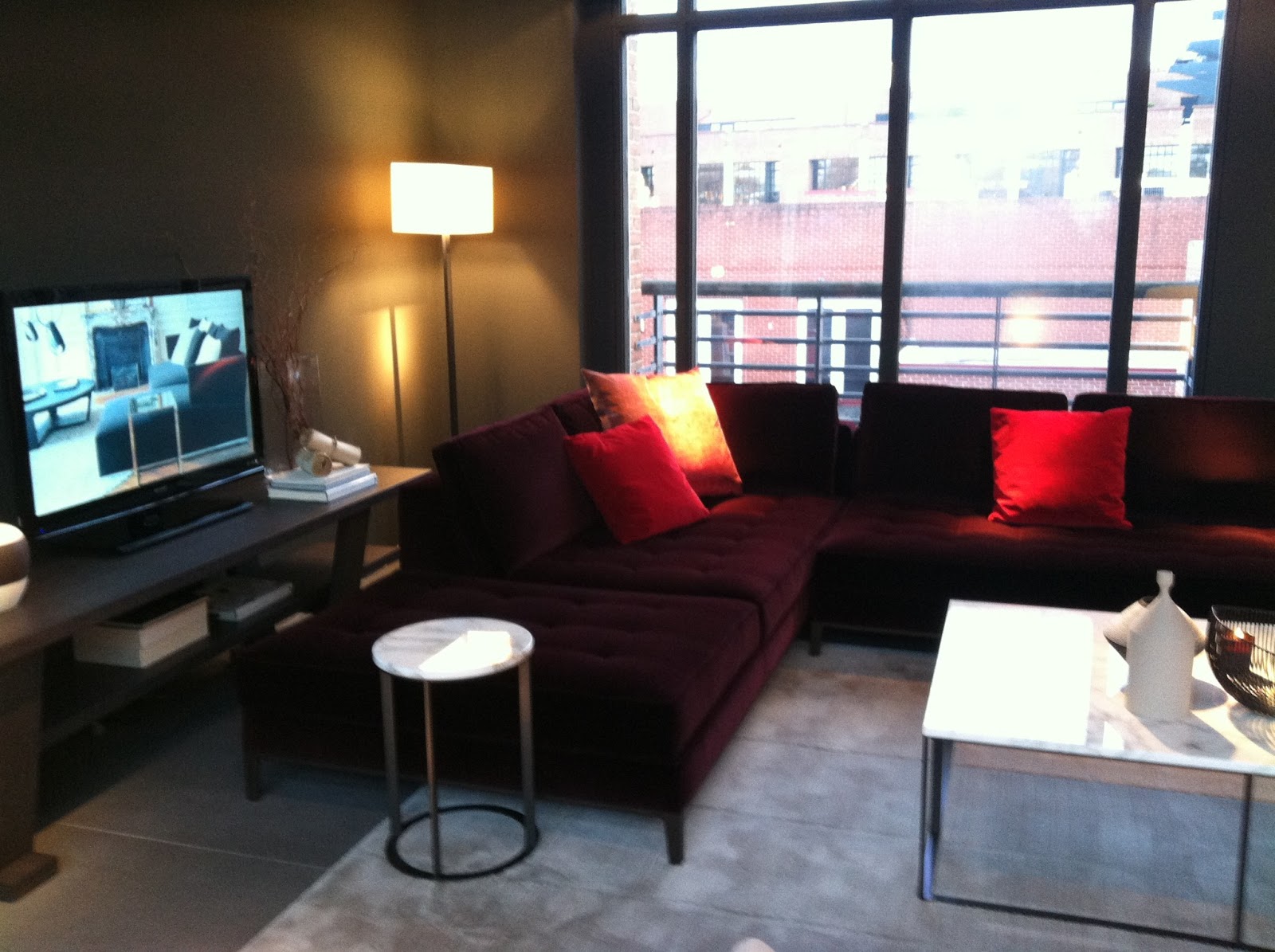
The furnishings from Maxalto were more my speed especially the sectional above in this great maroon velvet; great for stretching out on movie nights.
I loved the LED lit console seen at the top of the page, even if it felt a bit commercial. The soaking tub above was pretty great too.
The egg shaped tub was probably my favorite, it looks so comfortable! I could see it in a more traditional bathroom with a different faucet.
The furnishings from Maxalto were more my speed especially the sectional above in this great maroon velvet; great for stretching out on movie nights.
Probably my favorite item on view though was an installation of these paper butterflies by artist Paul Villinski which fluttered as one walked by. What do you think, would you install any of these modern fixtures in your house?
Friday, March 29, 2013
ICAA upcoming lecture
Join the Mid-Atlantic chapter of the ICAA (Institute of Classical Architecture & Art) on Thursday, April 18th, for a lecture given by Gary L Brewer, partner at Robert A. M. Stern Architects, on their latest book Evidence. I've already purchased my copy and can assure you it matches the quality of Stern's other books and is such a beautiful exhibit of their work. Copies of the book will be available for purchase at the lecture.
Also I'm pleased to announce that I'm now a board member of the Mid-Atlantic ICAA and I encourage you to join us for our lectures and tours located in the area; join the organization at the website. I'll be sure to share them all with you here on the blog for those unable to attend.
Information on the lecture is available here, hope to see you there!
Tuesday, March 26, 2013
An artist at home, Pierre Bergian
As a blogger one receives masses of press releases, most of which prompt you to hit delete before even opening. Once in awhile though something intrigues me and pulls me in -this happened recently when someone from the Purdy Hicks Gallery contacted me about the artist Pierre Bergian who currently has an exhibit in their London space.
Pierre Bergian is known for his stark views of interiors -think "World of Interiors" magazine painted. It's no surprise his work is so intriguing to me as he studied art history and archaeology.Pierre also took these photos of his own house so it's an intriguing look at how the artist perceives his own interiors in life as well as in his work. I love the book filled library above.
See the similarities between his own house and his work? The paintings are kept spare so that the eye focuses on composition and proportion. The rooms are from memory; of abandoned grand country houses he visited as a child.
Pierre lives in Bruges, Belgium, with his family in a 19th century former soap factory (circa 1825) which has the proportions of a house from the 18th century. While he loves the diversity of the architecture in the small town he loves to travel to more cosmopolitan cities as often as he can. Notice the shelter magazines piled all over his house, (similar to my own!). There is more than one way to travel after all!
Pierre collects an assortment of items from all time periods. I love the eclectic assemblage in his rooms.
I also love the feel of casual European kitchens like his below; so much more cozy than our American counterparts which often feel like cold showrooms. Don't you love that light fixture above the stove too?
Pierre's favorite thing about his house is the amount of windows -light is always important to an artist. The living room has a beautiful skylight with stained glass laylight and overlooks the rear garden. New Replacement Windows, perhaps? I wonder if the fireplaces work?

Pierre's wife, Angele Boddaer, is also an art historian and works as a muralist and restorer of wall art. Don't you just want to be friends with this fascinating couple?

The spare use of strong color is found throughout the house. Why be afraid of color when you know how to use it? Restraint is key.
Their bedroom is a serene baby blue but is kept from being too sweet by the spareness of the furnishings.Pierre at work in his studio - the organized clutter is a keen insight into how his mind works.
Each photograph is composed as a still life. I wonder what the stacks of drawings contain?
Inspiration is found throughout the many magazines and books he collects.
Pierre's work is available through the Purdy Hicks Gallery in London, how I wish I could visit! If you find yourself in London, stop in and tell them ArchitectDesign sent you!
The Purdy Hicks Gallery is located at 65 Hopton Street in Bankside. All images in post are courtesy of the artist.
Tuesday, March 19, 2013
My dining room
May I apologize for my recent lack of posts but show you what I've been up to? As you may know I moved a few months ago into an older 'fixer upper' Coop apartment. I left downtown for the Cleveland Park neighborhood for numerous reasons, one of which was the need for more space and specifically a dining room.
Before I moved in the dining room had an ugly chandelier and wood shutters. Heavy wool wall to wall carpeting was throughout. That was a few months of some hard work ripping it all out!
You may recognize a lot of these pieces if you've been reading my blog for awhile; they're just finally coming together in their proper space. The chair in the top picture is one of my 'haunted chairs' which I decided to upholster in the Ralph Lauren plaid.
The large pastel drawing above the bookcase has been with me for a few moves now and I never feel at home without it. This room contains many of my favorite objects but probably the most beautiful is my Capri decanter from Baccarat beneath the drawing, I just love the classic lines..
I love having books here in the dining room which I use not only for every meal but also to spread out and study the latest magazines. Probably the largest project I tackled myself (other than the reconfiguration of the walls for which I hired a contractor) was painting the window sashes black to match my doors. I love how they turned out!
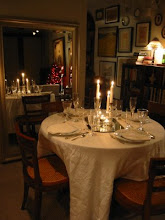
The view through the archway into my foyer shows a sneak peak of some more of the apartment. I know many of you like seeing table settings and here is one below from a little housewarming dinner party I put together after finally pulling the room together.
I already have a pair of bamboo shades I was contemplating hanging in the windows for a layered look behind the curtains. What do you think, do I need them? Practically speaking, as the window receives a lot of light I thought it might help with glare particularly in the summer. I suppose I could always take them down if they look too cluttered. Thanks for visiting and let me know what you think about the blinds!
Before I moved in the dining room had an ugly chandelier and wood shutters. Heavy wool wall to wall carpeting was throughout. That was a few months of some hard work ripping it all out!
You may recognize a lot of these pieces if you've been reading my blog for awhile; they're just finally coming together in their proper space. The chair in the top picture is one of my 'haunted chairs' which I decided to upholster in the Ralph Lauren plaid.
The large pastel drawing above the bookcase has been with me for a few moves now and I never feel at home without it. This room contains many of my favorite objects but probably the most beautiful is my Capri decanter from Baccarat beneath the drawing, I just love the classic lines..
I love having books here in the dining room which I use not only for every meal but also to spread out and study the latest magazines. Probably the largest project I tackled myself (other than the reconfiguration of the walls for which I hired a contractor) was painting the window sashes black to match my doors. I love how they turned out!
The view through the archway into my foyer shows a sneak peak of some more of the apartment. I know many of you like seeing table settings and here is one below from a little housewarming dinner party I put together after finally pulling the room together.
I already have a pair of bamboo shades I was contemplating hanging in the windows for a layered look behind the curtains. What do you think, do I need them? Practically speaking, as the window receives a lot of light I thought it might help with glare particularly in the summer. I suppose I could always take them down if they look too cluttered. Thanks for visiting and let me know what you think about the blinds!
Labels:
China of the week,
DC,
dining room,
dishes,
my apartment,
my work,
party,
Washington
Friday, March 8, 2013
Trumbauer's swan song
If you're not familiar with Trumbauer you may be familiar with some of his work. A self-educated man, he rose to become one of the most sought after residential architects of the early 20th century. His last completed project, Rose Terrace, is the subject of this brief post.
Started in 1930 the house wasn't finished until 1934 for Anna Dodge Dillman in Grosse Pointe Farms, Michigan. While noted as a difficult woman she had amazing taste and hired (or married) the best tastemakers of her day; Trumbauer, Lord Duveen, and Alavoine & Cie, amongst others. Anna lived at Rose Terrace until her death in 1970, spending summers at her Mizner designed estate in Palm Beach, Playa Riente (not a bad life, no?).
The house was immense as you can see from the floorplans above. While Trumbauer was known mainly for large houses, this was his last and certainly his finest. Many refer to the house as the best example of French neoclassical style ever built in this country: a slight on Miramar, the Trumbauer house on which Rose Terrace was based.
Anna lived at Rose Terrace in isolated splendor especially as she descended into her twilight years; money provides an excellent buffer and she lived in a Belle Epoque splendor as the fortunes of Detroit crumbled.
Sadly the house didn't fair as well as Anna. After her death the house was unable to be sold, mainly due to the 70s recession. After a few years of neglect the contents were dispersed (mostly auctioned off although the music room resides in the Detroit Art Museum) and the house torn down. The gates now enclose a bland subdivision.
Was Rose Terrace one of the last great estates to be seen in this country? If so its ending is rather poetic as it lasted as long as Anna.
See and read more about Rose Terrace at Old Long Island and a series of fascinating videos HERE.
All images are from the aforementioned book and not the editor's own.
Monday, March 4, 2013
New at NGA
This past weekend I visited the National Gallery of Art, one of my favorite DC haunts, to see the highly recommended exhibit on the Pre-Raphaelites but also took the opportunity to wander around one of the most beautiful buildings in the city.
One of my favorite things to see in the museum isn't even technically a work of art but rather the main rotunda which generally has an amazing garden display. The Ames-Haskell Azalea Collection was on display and reminded me that spring is on the way!
Also not to miss is a fascinating exhibit on Manipulated Photography before Photoshop. Tell them I sent you!
One of my favorite things to see in the museum isn't even technically a work of art but rather the main rotunda which generally has an amazing garden display. The Ames-Haskell Azalea Collection was on display and reminded me that spring is on the way!
Also not to miss is a fascinating exhibit on Manipulated Photography before Photoshop. Tell them I sent you!
Friday, March 1, 2013
Changing technology in interiors
Recently while checking out a new project, I came across a forgotten relic in an unused corner of a building. The structure has had many uses over the decades and somewhere during the passage of time, an old hanging oil lamp was converted to electricity. Rather than dispose of the old 'technology' despite its dated appearance and missing parts the light fixture was re-purposed. Will it survive another 150 years; only time will tell! But what will happen to the light fixtures we install today in 150 years, let alone tv cabling and wiring. I can attest to personally removing about a mile of exposed telephone wires from my current apartment!
Wednesday, February 27, 2013
Posh Pockets of DC
While wandering around the city this past weekend I visited one of my favorite little pockets of the city, hidden in plain sight. You know what I mean when I say pocket of course; A small separate but unexpected area set within a different neighborhood.
This pocket in particular has retained an aire of exclusivity despite being nestled into a neighborhood recently known more for prostitution and drugs than affluent housing; the epicenter of such a crime zone in fact. Not one but two houses (mansions really) designed by my favorite architect, John Russell Pope, reside cheek to jowl across from one of the most beautiful Coop buildings in the city.
At the time these residences were built of course, the early 1910s till mid 1920s, this area of the city was one of the most exclusive residential neighborhoods in the city. Many of these fine houses still exist although in somewhat dire circumstances as embassies and apartment houses in shabby condition. However this one hidden pocket along a one way street has remained the lair of wealth.
Pope designed the first house seen here in 1925 for Irwin Laughlin in the Louis XVI style. Oddly enough, Laughlin was from my hometown of Pittsburgh and the grandson of one of the founders of the Jones and Laughlin Steel Company (you may remember I wrote about the Jones mansions in Pittsburgh at an earlier date). The neighboring house was built earlier in 1912 for Henry White - both houses now function as headquarters for the same organization.
At the same time as the Laughlin residence was being completed in 1925, a grand apartment building was being designed directly across the street by Joseph Younger in Georgian Revival style. City living, where else could your mansion be directly located across the street from apartments (admittedly the poshest apartments of their kind).
This glorious buildings features many of my favorite apartments in the city and rarely come up for sale: wood burning fireplaces, up to 4 bedrooms and grand entertaining spaces are not easy to find in Washington real estate.The building is detailed as finely as the Pope mansions across the street: important as these apartments originally sold for higher square footage costs than those very houses!
The original elevator has been lovingly retained (albeit with new mechanical systems) and is identical to the one in my own building built at the same time period. However, they have cleverly stripped the paint from the metal -allowing the classical design of industrial materials to shine through.
Photos taken with my iphone, select and click to enlarge.
Labels:
architects,
DC,
exteriors,
gardens.,
houses,
Washington
Subscribe to:
Posts (Atom)


.jpg)